

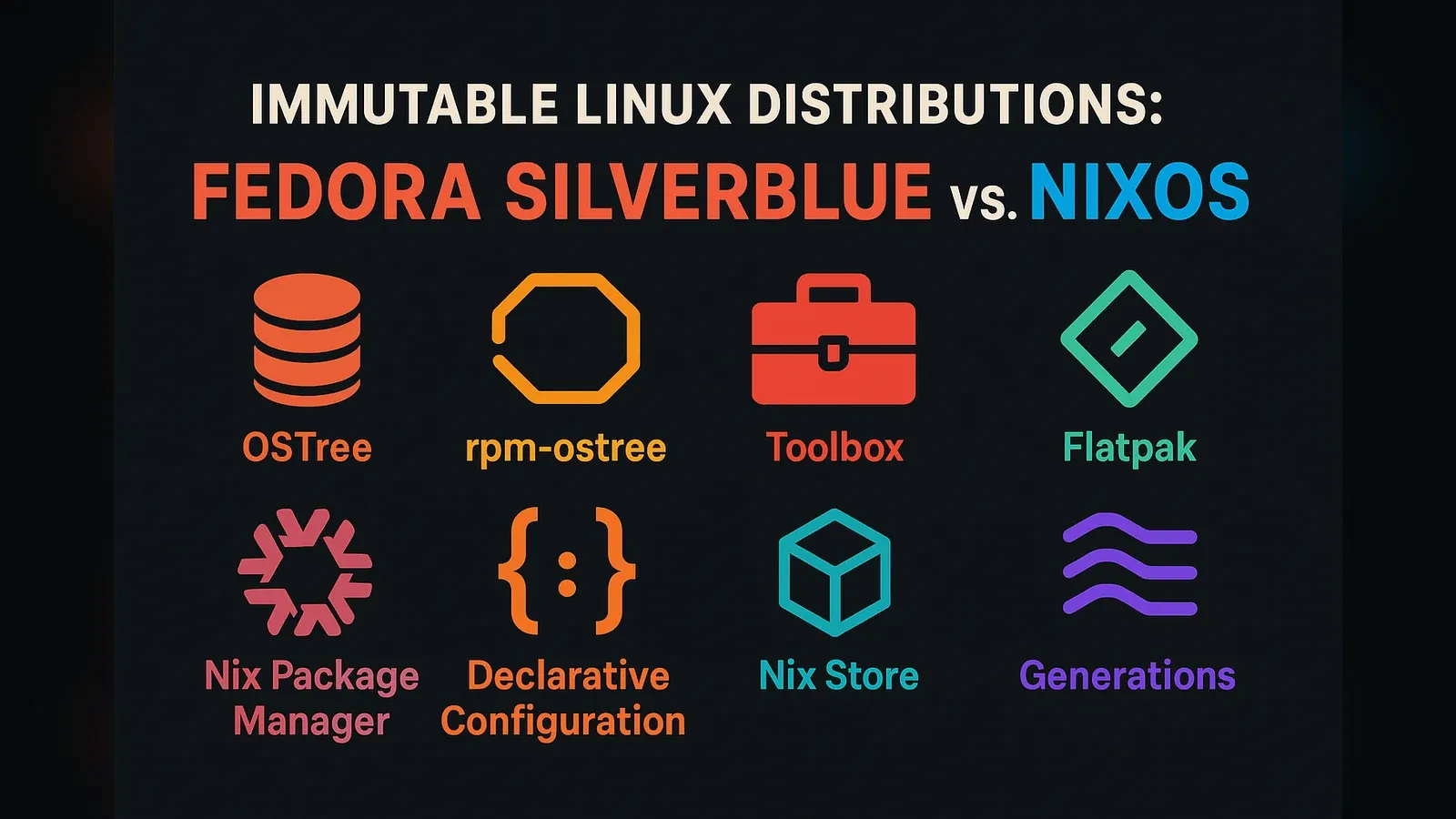
The traditional way to install software on Linux is to write files scattered throughout the system. After a few years, no one knows for sure what’s on the machine. An immutable operating system solves that problem by prohibiting writing.
General Principles
- System folders are mounted in read-only mode
- Update by downloading the entire new system image and switching to it, rather than patching individual files
- The old version is retained; simply restart to revert
- User software is installed as a separate package and does not interfere with the system
Real Benefits
All machines are the same, so the error can be reproduced. An update either completes successfully or fails entirely; there’s no longer a halfway state caused by a power outage midway through. And most importantly for servers: rolling back takes just a minute, not an entire night.
The source of discomfort
Any habit of "quickly editing a file in /etc" is a thing of the past. Drivers that need to be compiled against the kernel, software that needs to be installed on the system, or tools that assume they can write to system directories—all of these must now be handled differently. For those accustomed to deep customization, the initial feeling is one of having their hands tied.
Selection rule: This is suitable for stable servers and workstations; avoid using it on machines intended for experimentation or testing unfamiliar drivers.
Thảo luận