

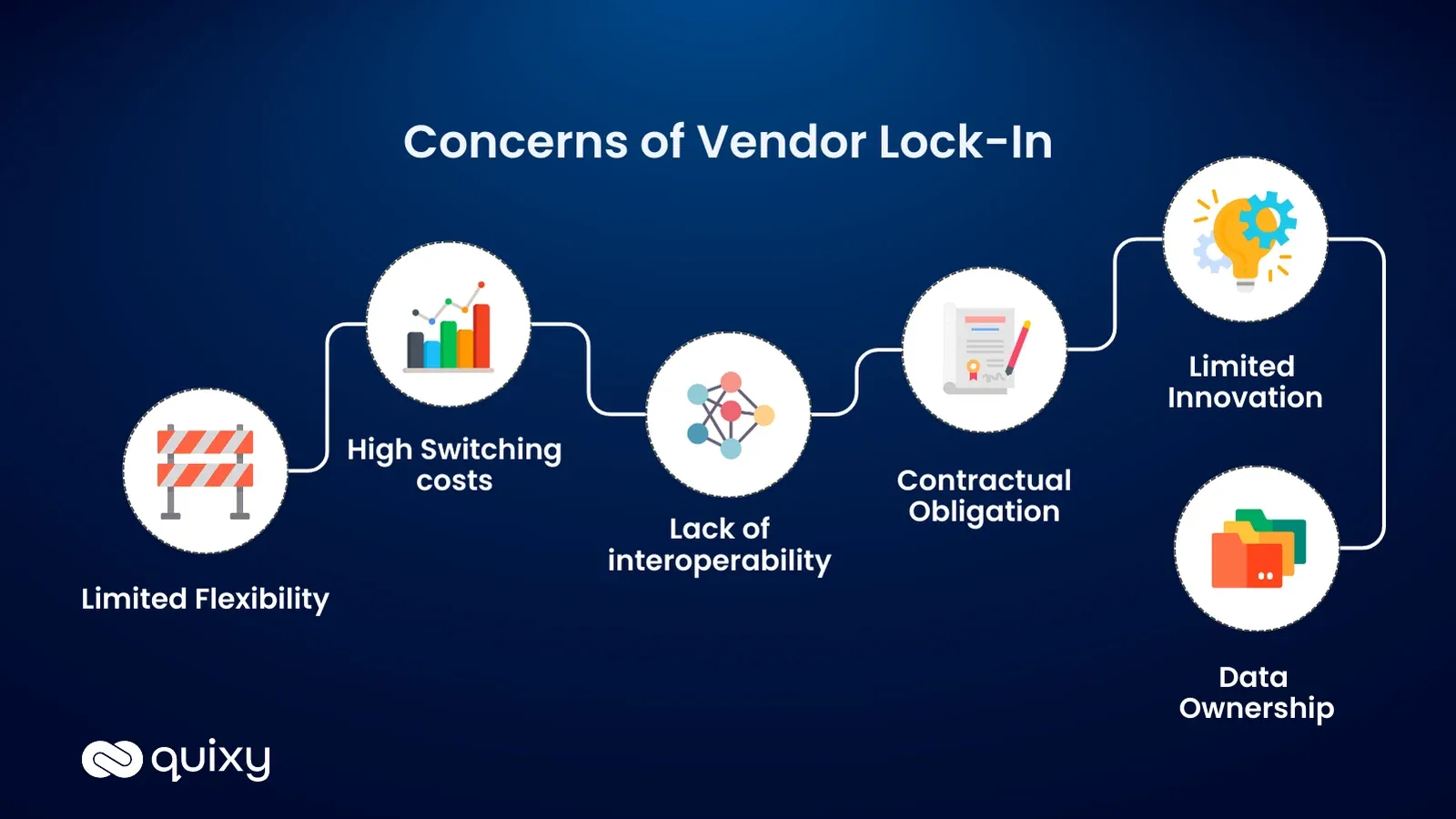
Vendor lock-in is rarely a conspiracy. It develops naturally: you use the product for a long time, data accumulates, you get used to the processes, and then one day, when you want to switch, you realize the cost is too high.
Three levels of difficulty, from easy to hard
- Data Lock-in — data in a proprietary format or data that can only be exported in a stripped-down form. The most significant obstacle—and also the easiest to avoid
- Process Lock-in — the entire team has developed habits and automation around that tool
- Architectural lock-in — your code calls the provider’s proprietary service directly; the only alternative is to rewrite it
Quick Quiz Questions
Before making a long-term commitment to a tool, try answering these questions: How long does it take to export all the data? What format is it in? And is there enough data to recreate it elsewhere? If the export feature only produces a PDF or a simplified spreadsheet, that’s a clear answer.
Reasonable Defense Level
Avoiding locking entirely is often more costly than the benefits it provides—specialized services are always more convenient than building them from scratch. A practical approach is to accept locking in less critical areas and maintain flexibility in two key areas: the source data and the core components that drive the work.
For individuals, the rule is simpler: anything you want to keep after ten years—photos, notes, documents—must be in a format that another program can read today without needing any additional services.
Thảo luận